
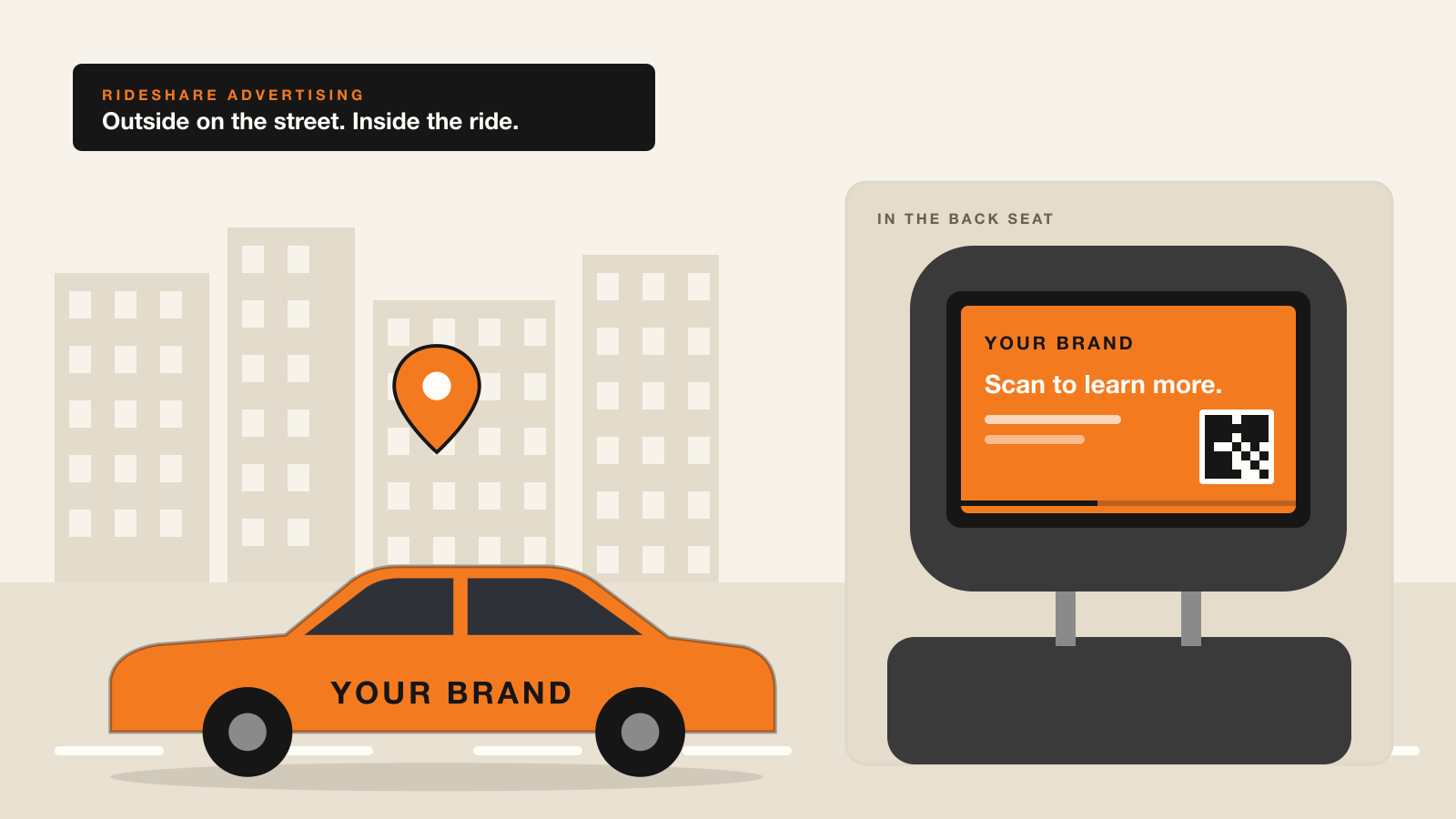
When people say "rideshare advertising," they usually mean a screen in the back of an Uber. That's still the heart of it, but it's no longer all of it. Today a brand can put a video in the back seat, a wrap on the outside of the car, and small Tiles on the doors, and run all three as one campaign with one report.
This guide covers rideshare advertising as it works today: the formats, who you reach, how campaigns are targeted and proven, what they typically cost, and how to start. (For how it all began, here's our original guide from 2017.)
What is rideshare advertising?
Rideshare advertising is any ad that runs on or in a car that drives for Uber, Lyft or another ride service. Inside, that's a screen facing the back seat. Outside, it's a wrap or a door panel that the whole street sees.
The ads are placed by companies like Vugo, which work with the drivers and fleets, not by the ride apps. Vugo isn't part of Uber or Lyft. Drivers who drive for them, and for other services, carry Vugo campaigns on their own cars and earn from them. Vugo runs on taxicabs and other fleets too, and here's our guide to taxi advertising.
Which formats can you buy?
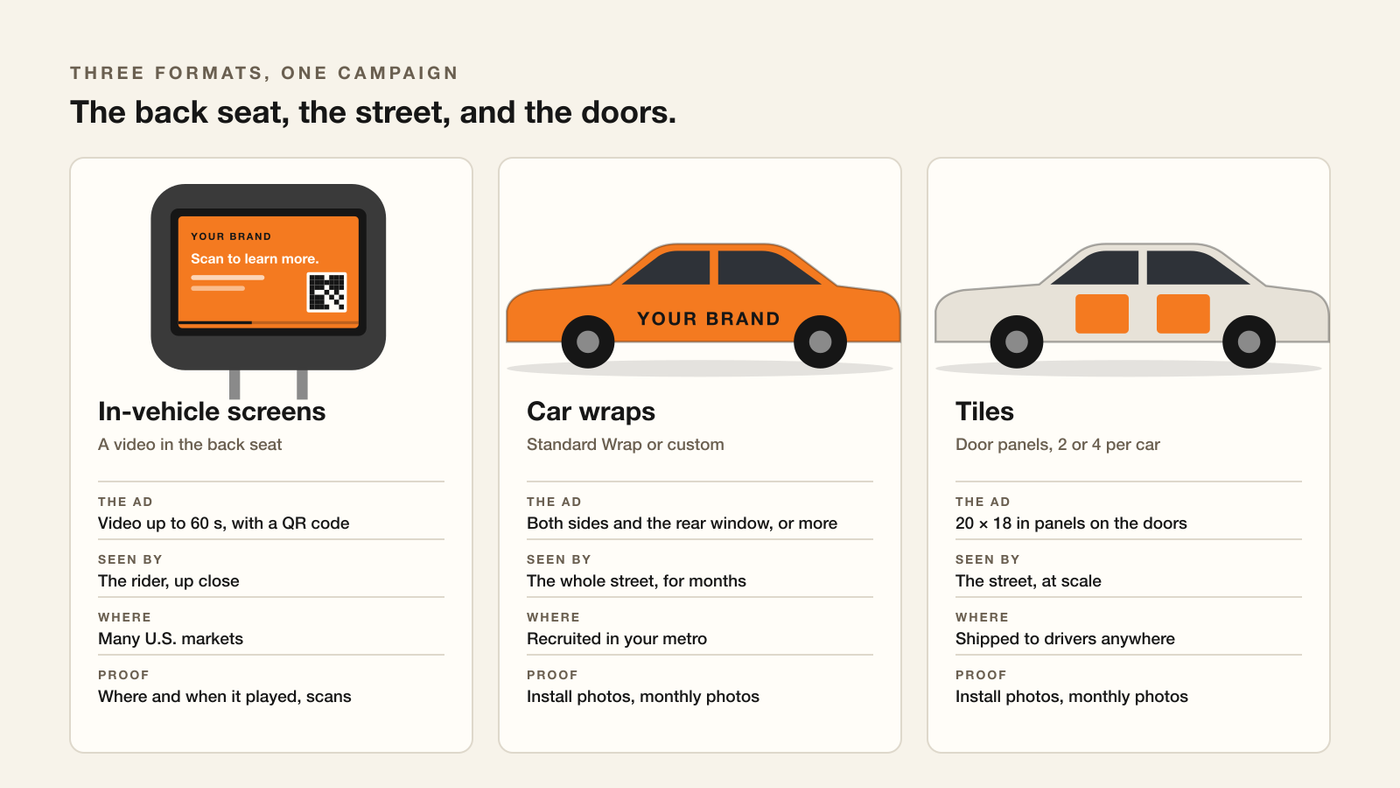
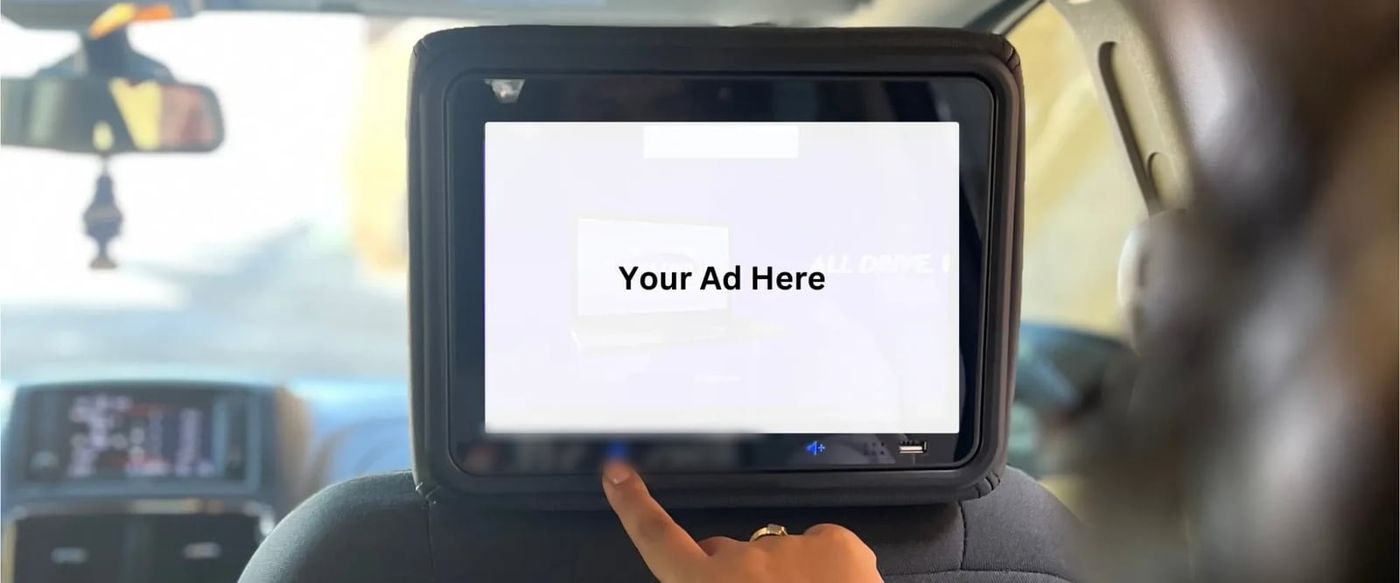
- In-vehicle screens. A screen on the headrest, facing the back seat. Your ad is a video of up to 60 seconds, with captions so the message works whether or not the sound is on, and a QR code that takes riders straight to your page. More on in-vehicle screens.
- Car wraps. The Standard Wrap covers both sides and the rear window and is bought right in Vugo Platform. Custom wraps go further, up to a full wrap, by inquiry. More on wraps, and which wrap fits your campaign.
- Tiles. Door panels, 20 by 18 inches, two or four per car. They're printed and shipped to drivers, who apply them, so a Tiles campaign reaches the road quickly and in numbers. More on Tiles.
Who's in the back seat?
More people every year, and the people many brands find hardest to reach.
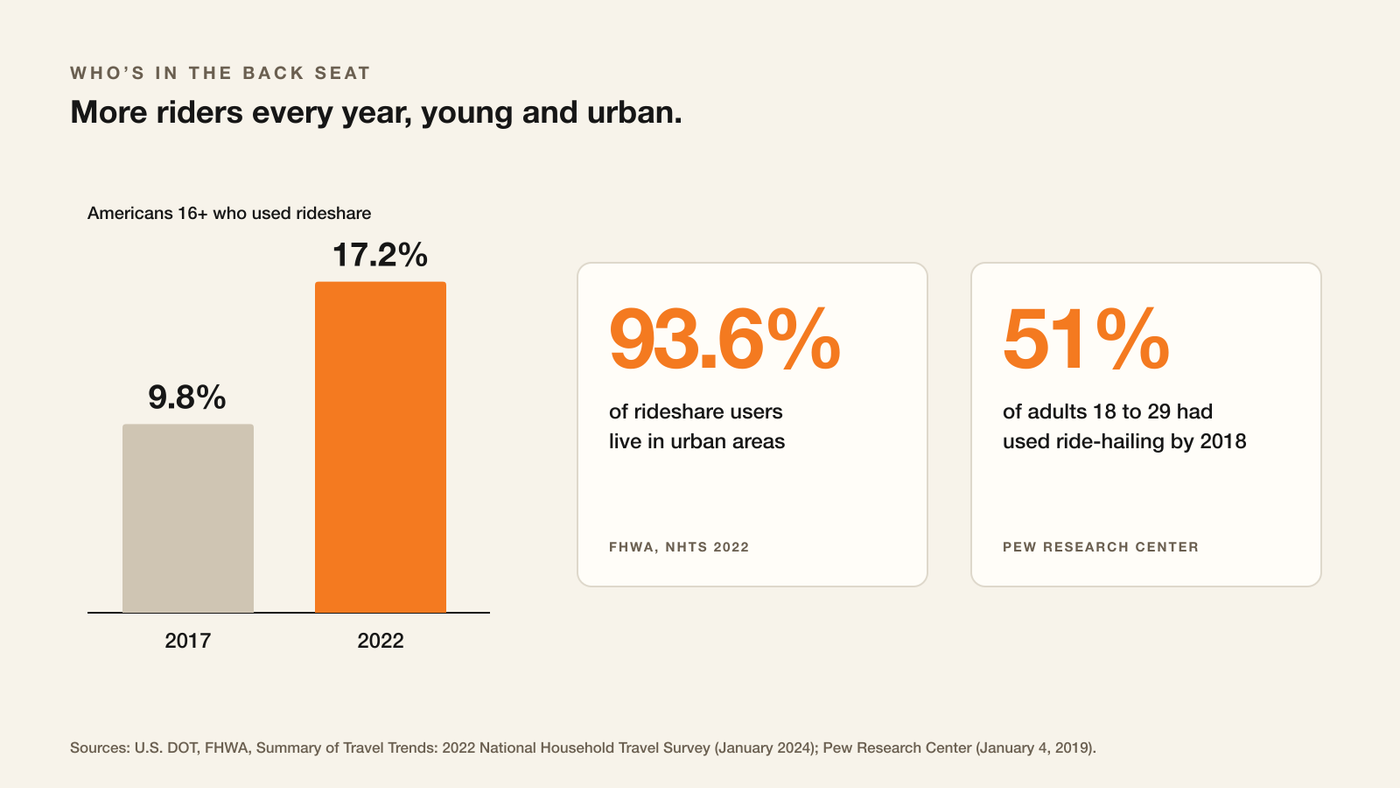
In the federal government's 2022 travel survey, 17.2% of Americans 16 and older used rideshare, up from 9.8% five years earlier, and 93.6% of them lived in urban areas. Pew found that half of adults under 30 had used ride-hailing as early as 2018. Who rides, by the numbers.
Riders are usually headed somewhere that matters to a brand: a restaurant, a game, the airport, a meeting, a night out. Rides commonly take 18 to 30 minutes, which is enough time for a short video to play more than once.
How does a wrap reach people?
A wrapped car takes your brand wherever its driver goes, all day, for months. In Nielsen's 2019 out-of-home study, 64% of people had noticed a wrapped vehicle in the past month, second only to roadside billboards.
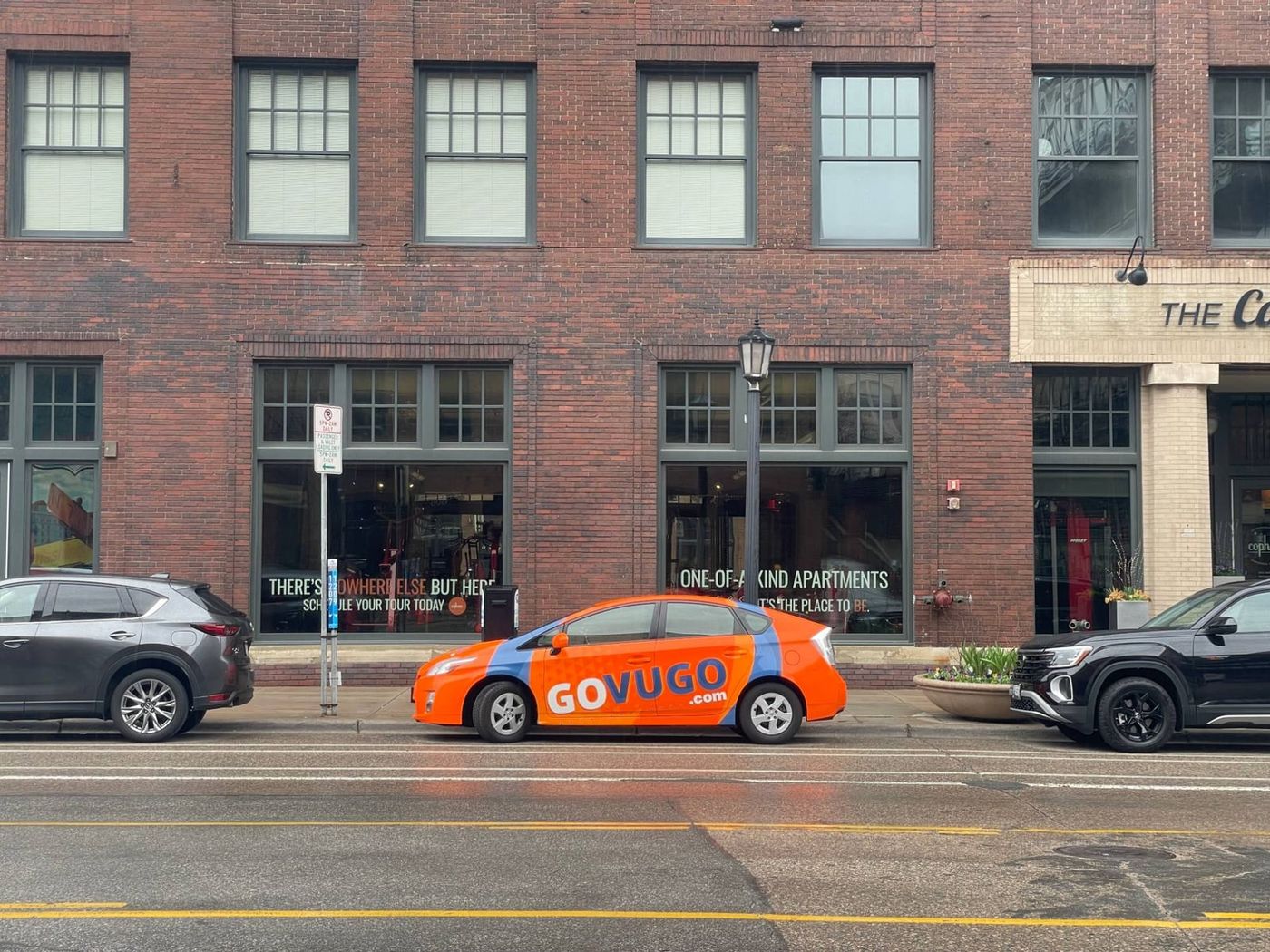
Wrapped cars are recruited for your campaign from drivers who work in the metro you choose: rideshare, delivery and fleet drivers, from the thousands of cars in Vugo's driver database. Because they're recruited for each campaign, a wrap campaign doesn't depend on where screens already run. Campaigns run for at least two months, and typically two to six.
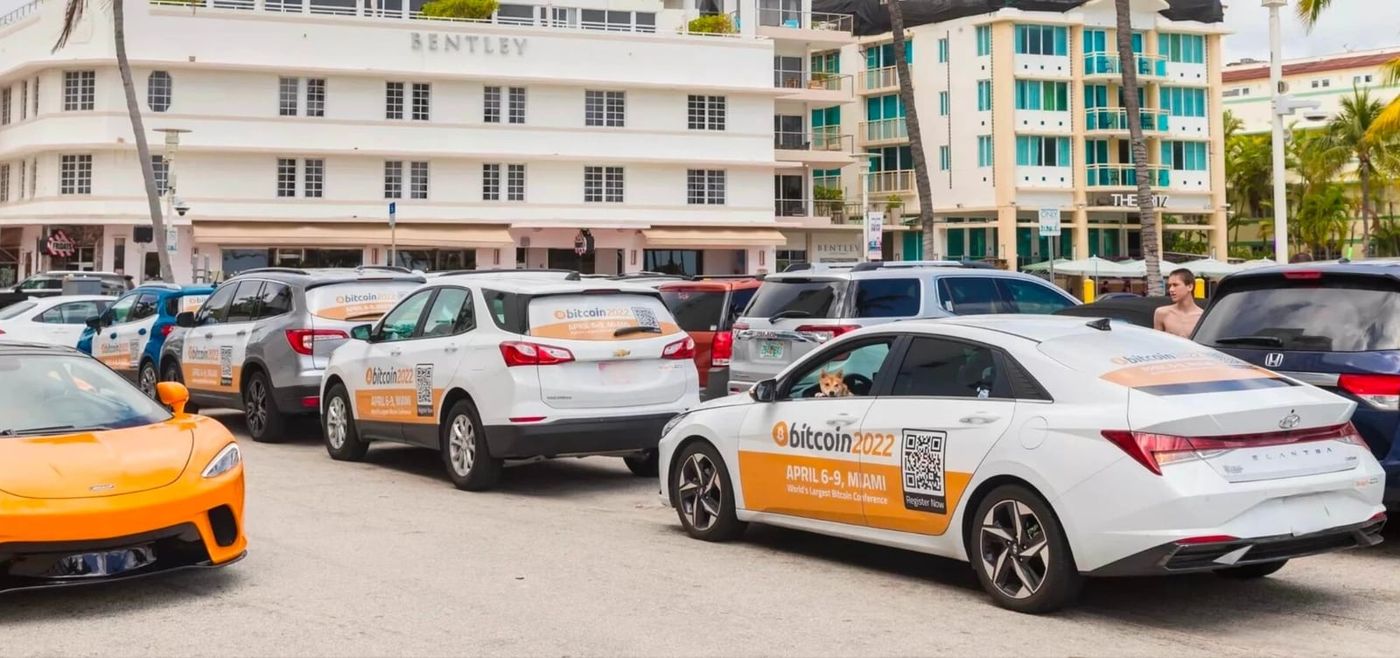
For the dates that matter, a swarm pays your wrapped drivers to bring their cars into a zone you choose, from a tenth of a mile to ten miles across or along a route, at the times you set. How swarms work.
How is a rideshare campaign targeted?
- By market and place. Choose your metros, and narrow screen campaigns to a radius around a place that matters to you.
- By context. TripIntent® gives priority to the ads that fit the moment, based on the places around the car and where it's headed when the driver has set a destination. It never stops an ad from playing, and it never uses medical, religious or legal places. How TripIntent works.
- By time. Plan flights around your season, local events and dates in Vugo Planning.
- After the ride. Retargeting follows up with the people who visited your page from a scan, and Vugo, your agency or your team can run a programmatic mobile buy in the same areas.
How do you know your ads ran?
You see it in your reports, and you pay only for plays that can be confirmed.
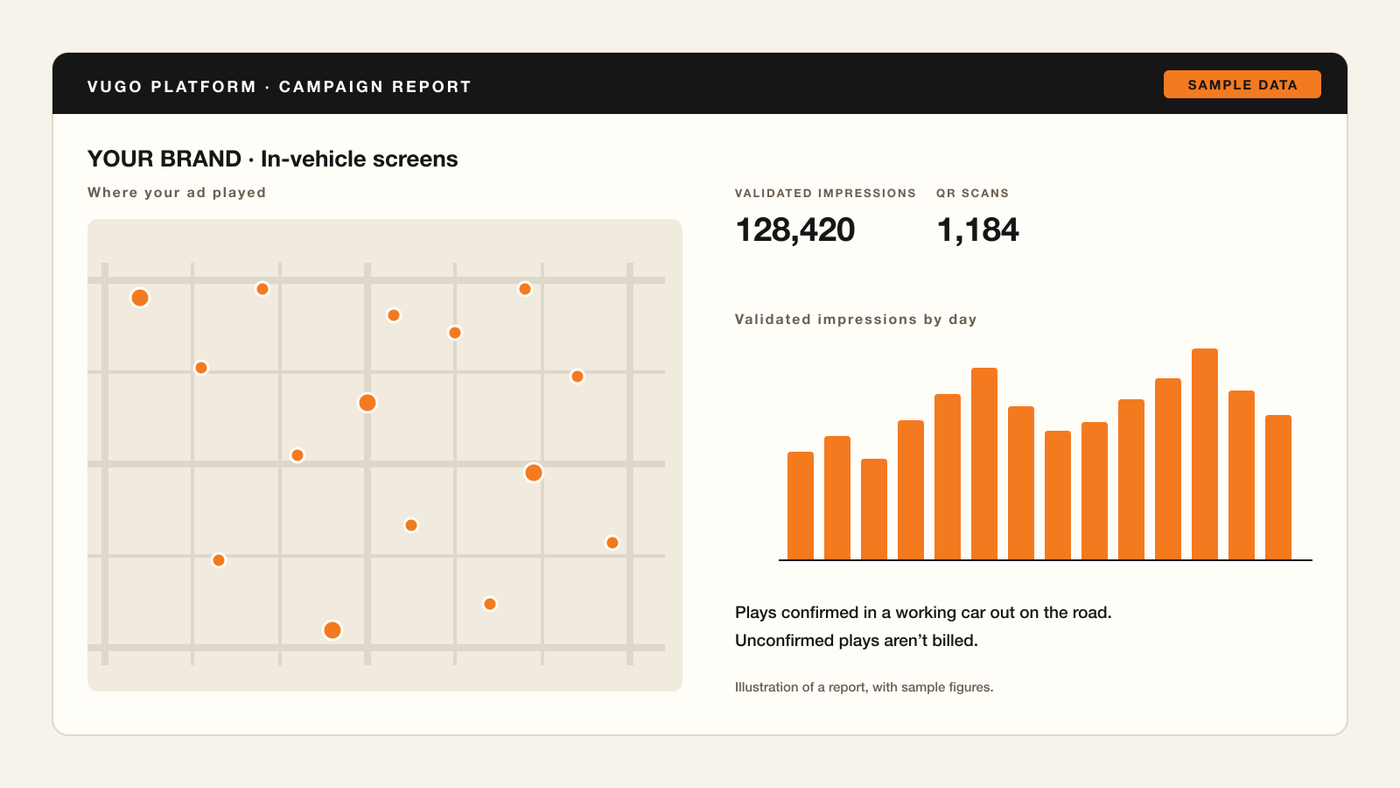
- Screens: you pay for validated impressions, plays confirmed in a working car out on the road. Plays that can't be confirmed are free. Reports show where and when your ad played and the QR scans it brought in.
- Wraps and Tiles: each car is checked from install photos before billing starts, and wrapped cars send photo proof every month. On a swarm, you see which drivers confirmed.
How do you measure results?
- QR codes and tagged links show visits from the back seat in your own analytics. Set them up.
- Visits near your location: add your store or venue to a screen campaign to see how many working cars passed nearby or were headed there. How it works.
- Two ads at once: split a screen campaign between two versions and let the results pick your message. Test two ads.
- A test market: run in one city, hold back a similar one, and compare sales over the same weeks.
How much does rideshare advertising cost?
Every campaign is quoted, but there are typical ranges. In-vehicle screens typically cost $20 to $25 per thousand impressions (CPM). Wraps and Tiles typically cost $0.75 to $5 CPM, and the longer a campaign runs, the lower it goes. How those costs compare with TV, streaming, digital and billboards.
How do you start?
- Set the goal. Awareness across a city, traffic to a location, or response you can count.
- Choose markets and dates. One city to test, or several at once.
- Pick the formats. Screens for a next step in the back seat, wraps or Tiles for the street, or both.
- Make the creative. A short, captioned video with your brand up front and one clear next step. For wraps, you approve a proof before anything is printed. Make a screen ad in Canva.
- Launch and watch. Follow plays, scans and proof photos in Vugo Platform as the campaign runs.
Not sure what to ask a vendor? Six questions to ask before you buy. Ready to plan? Plan a campaign by city, or tell us your market and your dates.
Common questions
Is Vugo part of Uber or Lyft? No. Vugo works with drivers and fleets directly. Drivers who drive for Uber, Lyft and other services carry Vugo campaigns on their own cars.
Where can I run rideshare ads? Wraps and Tiles can be recruited in nearly any U.S. metro. Screens run in many markets across the U.S.; tell us your city and we'll confirm coverage.
Can I run screens and wraps together? Yes. Many campaigns pair wraps for reach on the street with screens for a next step in the back seat, in one plan and one report.
How long does a campaign run? Wraps and Tiles run for at least two months, and typically two to six. Screen campaigns run on the dates you set.
What does the screen ad need? A video of up to 60 seconds, MP4 or MOV at 16:9, with captions carrying the message, and a landing page for the QR code.
Do screens count who's watching? No. Validated impressions confirm that your ad played in a working car out on the road. They don't count people.
Sources
- U.S. DOT, Federal Highway Administration, Summary of Travel Trends: 2022 National Household Travel Survey, January 2024: 17.2% of people 16 and older used rideshare, up from 9.8% in 2017; 93.6% of rideshare users live in urban areas (PDF); Vugo's summary.
- Pew Research Center, "More Americans are using ride-hailing apps," January 4, 2019: 51% of adults aged 18 to 29 had used ride-hailing by fall 2018 (pewresearch.org); Vugo's summary.
- Nielsen, Out-of-Home Advertising Study, 2019 edition: 999 online surveys of U.S. residents 16 and older, March 27 to April 5, 2019; wrapped vehicles 64% noticed in the past month (oaaa.org); Vugo's summary.