
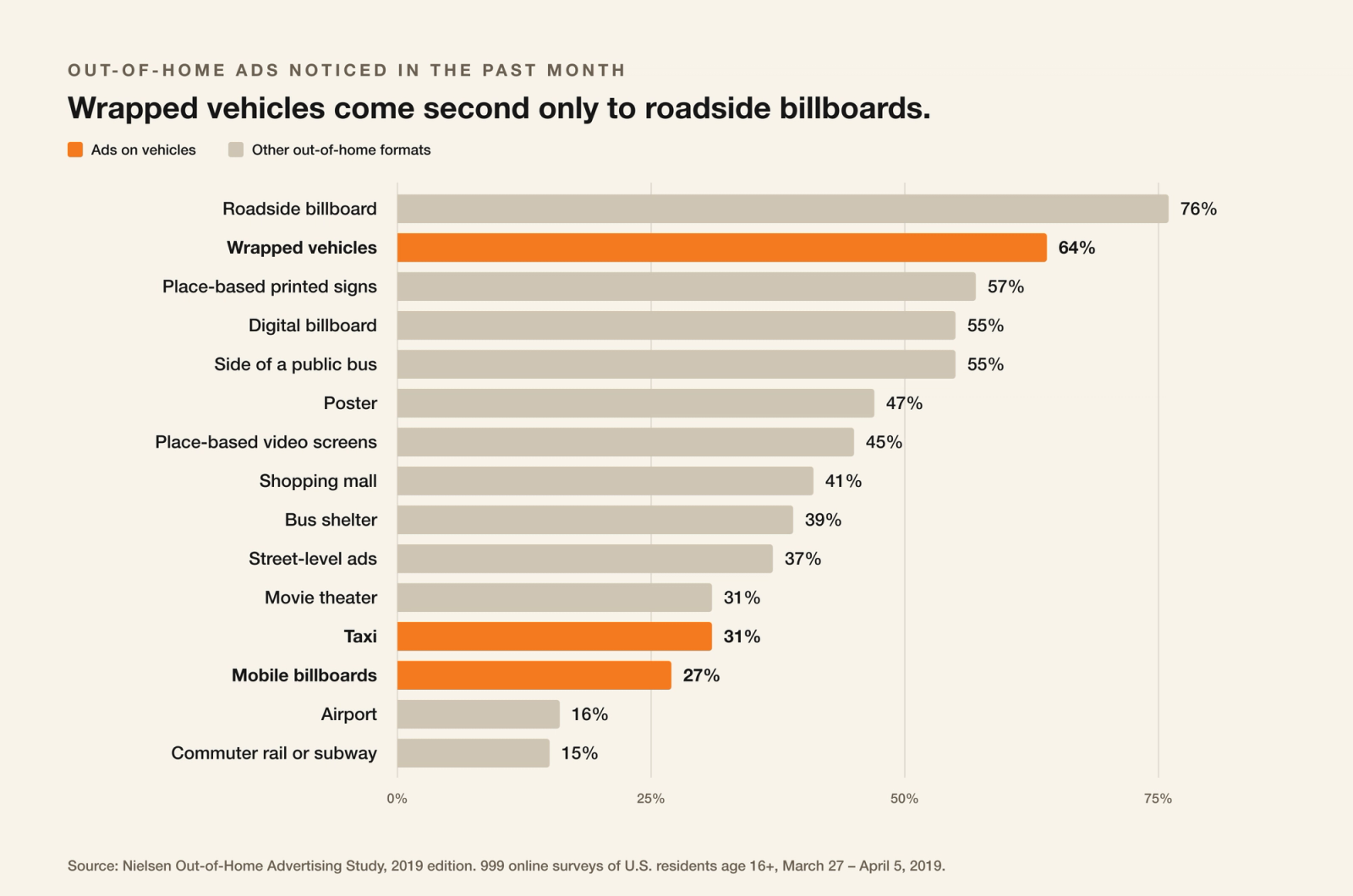
A wrap competes with the billboard.
More people had noticed a wrapped vehicle in the past month than any out-of-home format except the roadside billboard: ahead of digital billboards, bus sides, bus shelters and posters. And unlike a fixed site, a wrap moves with the traffic, through the neighborhoods, past the venues and along the commutes where your customers are.
A full day a week on the road.
The average traveler spent more than 25 hours a week in a vehicle and covered 159 miles. Heavy travelers, over 150 miles a week, spent about 36 hours. That is time spent beside, behind and across from other cars.
Give people the next step.
Out-of-home viewers act on their phones: 42% of smartphone owners had searched for an advertiser after seeing an out-of-home ad, and one in five had scanned a QR code, tapped an NFC tag or sent a text. Put a short web address or a QR code on the creative, and pair the wrap with in-vehicle screens so a rider can scan from the back seat.
Point them to the door.
One in five out-of-home viewers had gone straight to a business after seeing an ad that gave directions to it, and 74% of them bought something. With swarms, wrapped cars can be brought into a zone around a store or venue for a scheduled window.