
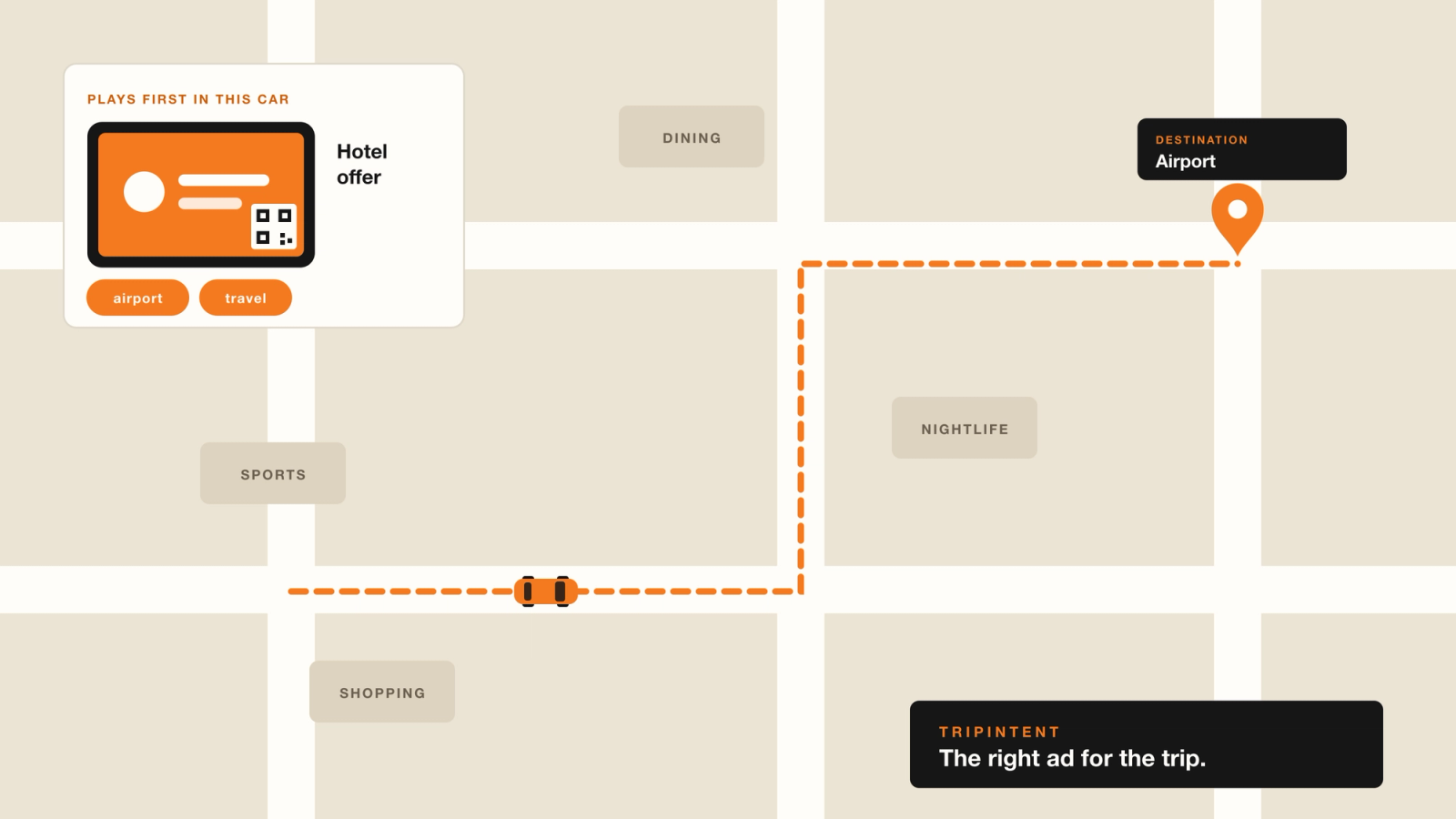
A rider heading to the airport is thinking about a flight, a hotel, maybe dinner when they land. A rider heading downtown on a Friday night is thinking about something else entirely. Most advertising can't tell the difference. TripIntent can.
TripIntent is the context engine behind Vugo's in-vehicle screens. Vugo has used it since our first campaigns in 2015, and in the rebuilt Vugo Platform it's simpler and more transparent than ever: it reads where the car is and where the ride is going, and puts the ad that fits first.
Context in, priority out
TripIntent works in three steps:
- It reads the place. The area around the car, and the destination when the driver enters one, is matched to the places nearby.
- It maps them to intent. Those places become intent keywords: airport, travel, dining, nightlife, entertainment, sports, shopping, outdoors and education.
- It ranks, it doesn't filter. Campaigns that match go first, then campaigns with no context set, then the rest.
That last step matters more than it sounds. TripIntent is a priority, never a filter. Choosing "airport" doesn't mean your ad plays only near the airport. It means your ad plays first there, and still plays everywhere else your campaign is allowed to run.
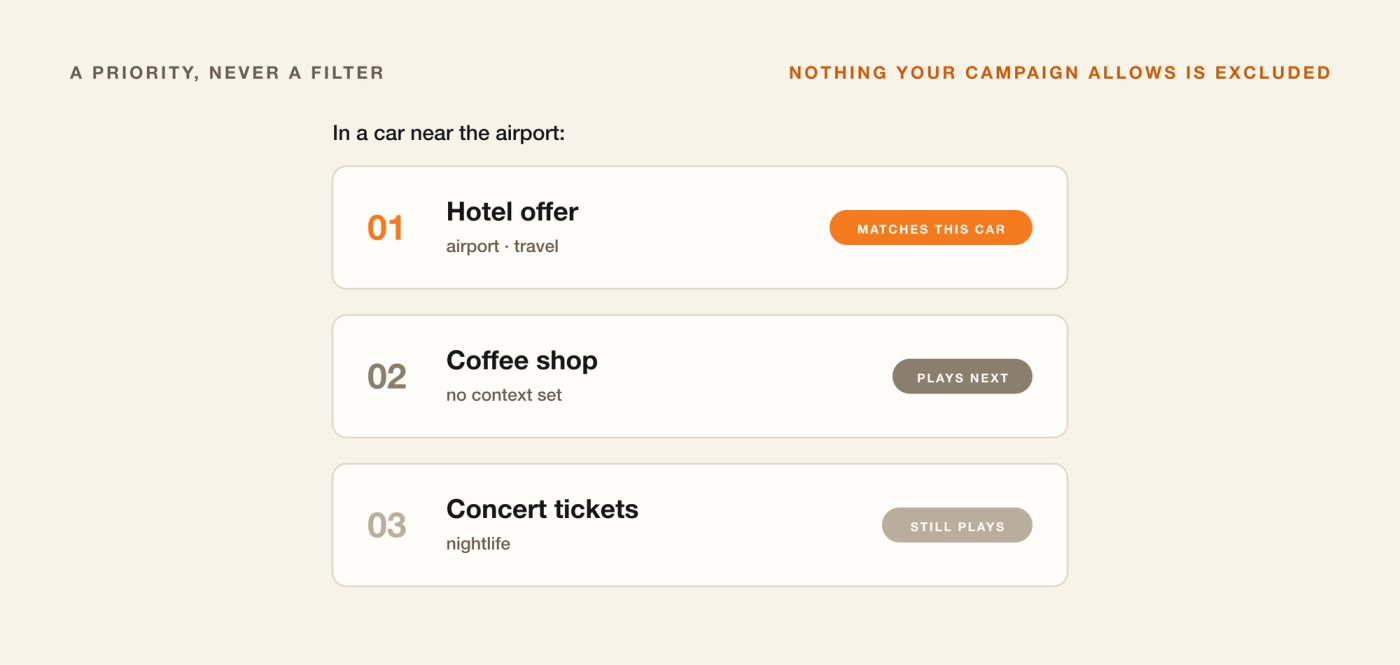
Why priority beats a filter
Hard targeting sounds precise, but on moving media it backfires. Narrow a campaign to a few places and it either runs out of delivery or never spends. With TripIntent, you get both: the best moments first, and full reach the rest of the time.
It also stacks with the other settings in Vugo Platform:
- Where it runs is a hard limit: the metros you choose, and an optional radius around an address.
- Trip intent targeting, ZIP codes and time of day put your ad first in the cars and hours that fit, without shrinking reach.
- Active days is the other hard limit, if you pick specific days.
What it reads, and what it never uses
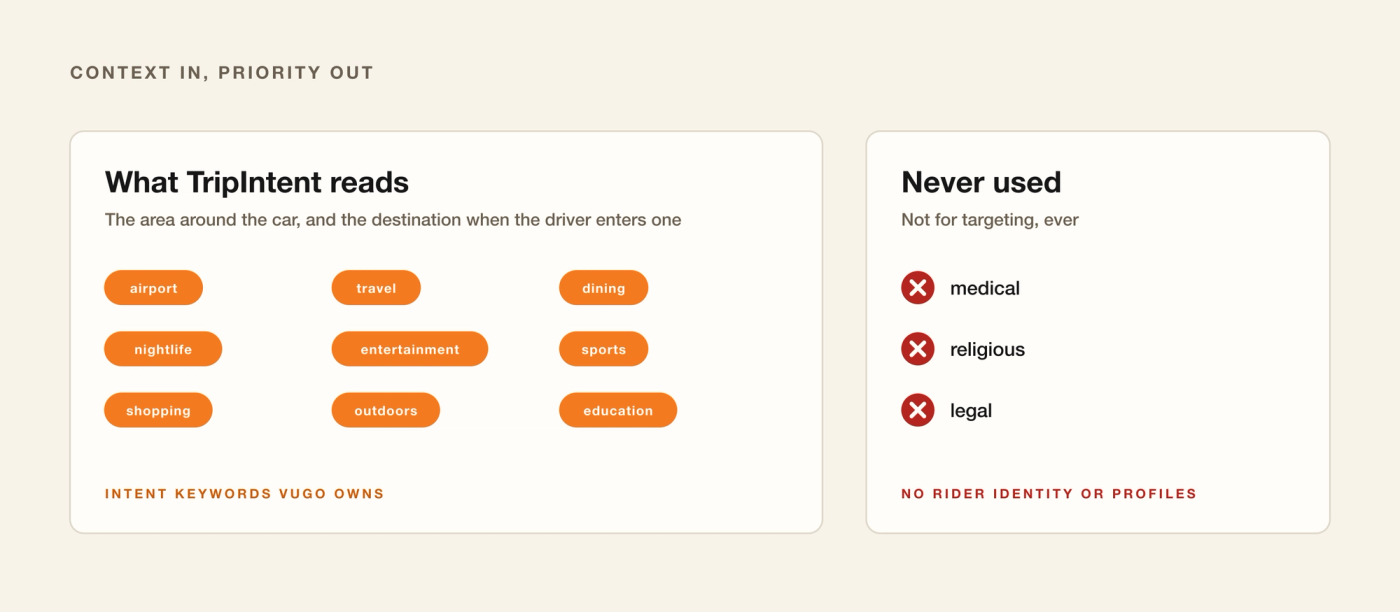
TripIntent never uses medical, religious or legal places to decide what plays. It doesn't know who is in the car: there's no passenger identity, no device IDs and no rider profiles, and the screens don't sense or count passengers. Delivery maps are clustered on Vugo's servers, so no ride, driver or rider can be identified from them.
That's a deliberate choice. Context is powerful precisely because it's about the moment, not the person.
Putting it to work
A few ways advertisers use TripIntent:
- Hotels and tourism: airport and travel, so the offer is first in cars around the airport and on rides headed there.
- Restaurants and bars: dining and nightlife, paired with a time-of-day priority for the hours you're busiest.
- Events and entertainment: entertainment and sports, in the weeks and evenings that sell tickets.
- Retail: shopping, so the promotion is first in cars around shopping districts and on rides headed to them.
Pair TripIntent with a QR code and every scan lands in your own analytics, so you can see which moments work best.
See how TripIntent works, explore in-vehicle screens, or talk to us about your next campaign.