
One of the first questions we hear about vehicle wraps is how long a campaign should run. It's a fair question. Most media is bought in short flights: a week of radio, a month of digital, a two-week billboard showing. A wrap is different, and the length of the campaign is one of the biggest choices you'll make.
The short answer: at least two months, and most campaigns run two to six. Here's why, and how to pick.
Why a wrap has a minimum
A wrap isn't a file you upload. Before your brand is on the road, there's real work: drivers are recruited in your market, the artwork is fitted to each make and model, a professional shop installs every wrap, and install photos are checked before billing starts. At the end, the wraps come off.
That work happens once, however long the campaign runs, so the longer the wraps stay on, the more time on the road you get out of it. That's why Vugo wrap campaigns start at two months, and why many advertisers choose to run longer.
Why longer works harder
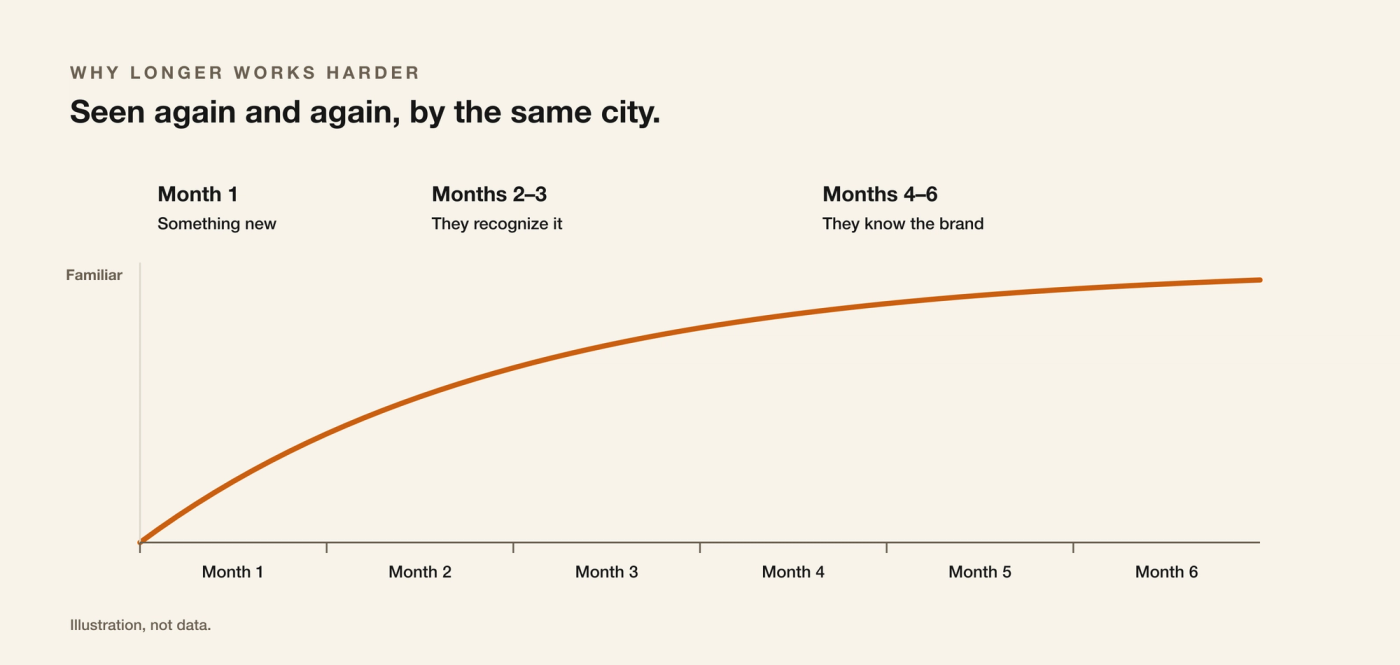
Repetition is the point. One sighting of a wrapped car is a surprise. The tenth, on the way to work, outside the grocery store and at the light by the gym, is a brand people know. A wrap's power comes from being seen again and again by the same people in the same city, and that takes weeks, not days.
The car keeps showing up. Wrapped drivers aren't on a route you bought for a week. They drive for a living, across the whole city, day after day. The longer the campaign, the more of the city's streets and hours it covers.
It outlasts the moment. A launch, a season or a sale has a run-up and a tail. A wrap that's on the road before people start looking, and still there after, is part of the whole decision, not just the last day of it.
How to pick a length
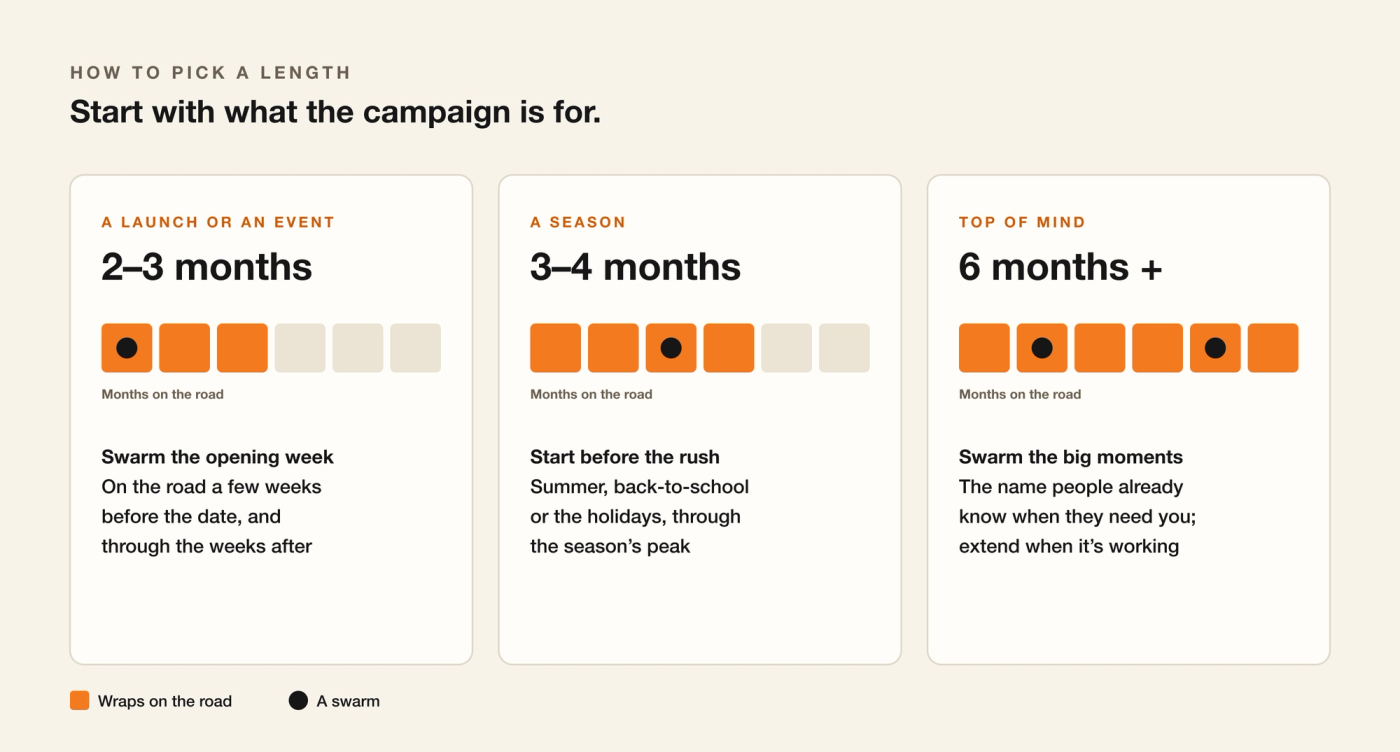
Two to three months: a launch or an event. Opening a new location, launching a product, or promoting a festival or a big weekend. Start the wraps a few weeks before the date, so people have seen your name by the time it matters, and keep them on through the weeks after.
Three to four months: a season. Summer for a hotel or an attraction, back-to-school for a college or a retailer, the holidays for a restaurant or a store. Start before the rush, when people are first making plans, and run through the season's peak.
Six months or more: staying top of mind. For a brand that people choose again and again, like a bank, a law firm, a home-services company or a car dealer, the goal isn't one spike. It's being the name people already know when they need you. A longer campaign does that, and you can extend it when it's working.
Add peaks with swarms
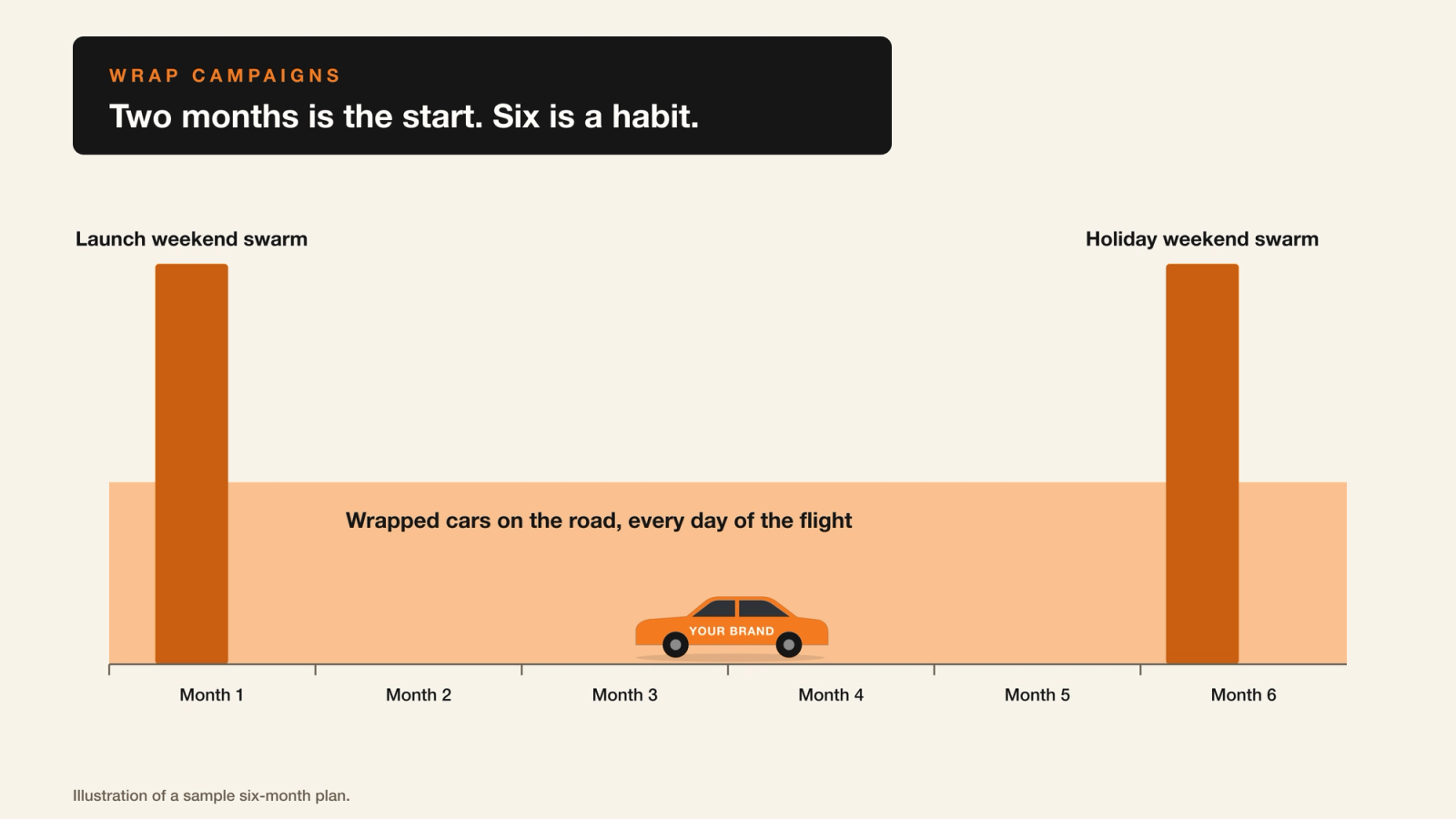
A long campaign doesn't have to be flat. With a swarm, you choose a place and a window, and the campaign's wrapped drivers are paid to bring their cars into that zone for the hours you set. The rest of the time, the same cars keep covering the city.
That gives a long campaign its peaks: the opening weekend of a new store, a festival, a game day, a conference in town. Six months on the road, with your cars all together outside the door on the days that matter most. Here's how wraps and swarms work together.
Plan the calendar backward
Work back from the date that matters most:
- The moment. The opening, the event or the start of the season.
- On the road. Aim to have the wraps on a few weeks before it.
- Install. Allow time for shops to install every car in your market.
- Design and recruit. Artwork fitted to each make and model while drivers in your market sign up.
- The brief. Your market, how many cars, your dates and your message.
The earlier you start, the more cars you can have on the road on day one.
A few things to decide up front
- Your market. One city or several. Drivers are recruited for each campaign, so the cars carrying your brand are the ones driving where you want to be seen.
- How many cars. More cars spread your brand across more streets at once. Fewer cars over a longer campaign build familiarity in the places they drive.
- Full or partial. A full wrap makes the biggest statement. A partial wrap keeps the car's own color and costs less to produce, which can leave room in the budget for more months or more cars.
- When to swarm. Mark the dates that matter on the calendar before you start.
- What happens at the end. Decide early whether you'd like to extend if the campaign is working, so the wraps don't come off just as people learn your name.
A wrap campaign is a commitment, and that's what makes it work. Give it time on the road, and the city gets to know your brand.
See vehicle wraps, learn about swarms, or talk to Vugo about your market and your dates.