
Spring break has started, and summer is closer than it looks. If your hotel, resort or attraction depends on the season, the next few weeks are when you decide where your name will be when the visitors arrive.
There will be plenty of them. TSA screened 904 million travelers at U.S. airports in 2024, a record, according to its year-in-review release in January 2025. Every one of them landed somewhere, and a lot of them took a rideshare or a cab from the airport to the hotel district, the convention center or the beach.
Why cars fit travel
Visitors make a surprising number of decisions after they arrive: where to eat tonight, which tour to book, whether to add a night, where to stay next time. They make them in a city they don't know, often from the back seat of a car they didn't drive.
Rideshare and taxi cars go exactly where visitors go: the airport curb, the hotel blocks, the convention center, the waterfront, the nightlife streets. A wrapped car in those places is seen by visitors on foot and by the locals who recommend places to them. In Nielsen's 2019 Out-of-Home Advertising Study, 64% of U.S. residents 16 and older had noticed a wrapped-vehicle ad in the past month.
And travel starts before the trip. Most regional resorts and attractions draw from a few cities within a day's drive. The decision to visit you is made at home, in those cities, weeks ahead.
What each format does for travel
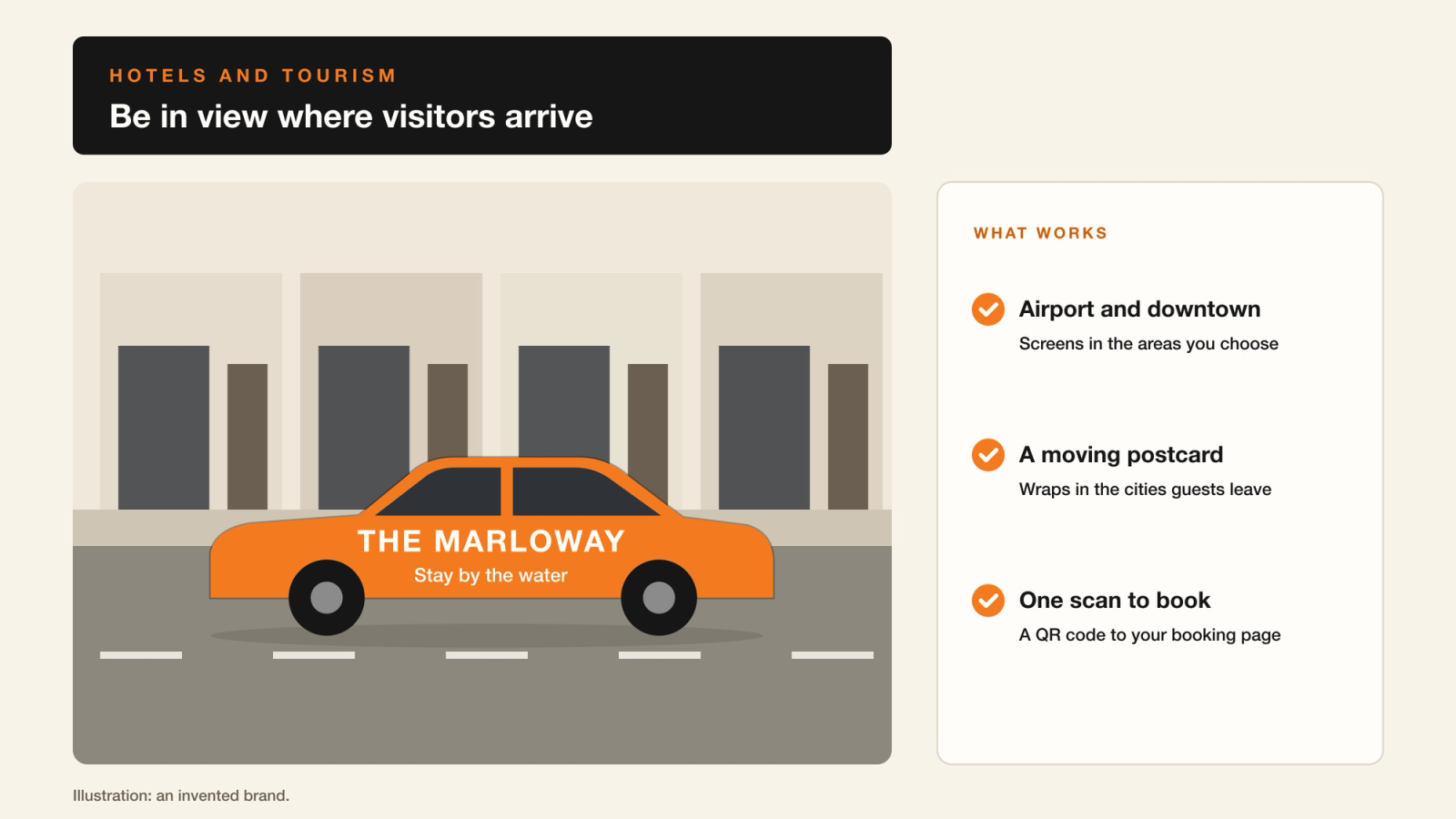
In-vehicle screens. Passenger-facing screens in working rideshare and taxi cars play your short video, captioned so the message lands, and a QR code to your booking or tour page. Screens are available by market, so Vugo confirms what's running in your city. You can keep your ad inside a radius around an address you choose: your hotel, the convention district or the airport. Screen campaigns are set by budget and dates.
Full and partial wraps. A wrap turns a car into a moving postcard for your hotel or destination. Full wraps cover the whole car; partial wraps carry your message on the sides and rear. Vugo recruits drivers per campaign in any metro you choose, a professional shop installs the wraps, and campaigns run at least two months, which matches a season. Wraps are priced per car per month.
Swarms. For the weeks that matter most, a swarm brings your campaign's wrapped cars to a place and a window you schedule, a convention center at arrival time or a festival route on a Saturday, and pays the drivers to be there.
Follow-up. Vugo, your agency or your team can run a programmatic mobile campaign that follows up with people who visited your booking page from the QR code, on other apps and sites, while they're still deciding.
Five plays for hotels and attractions
- Be the next step from the airport. Put your screen ad inside a radius around the airport and the hotel district, with a QR code to book direct. A visitor who's still choosing tonight's dinner or tomorrow's tour can act on it right there.
- Win the drive market. Wrap cars in the cities your guests come from, two or three months before your peak. A beach resort's postcard on the streets of the city two hours inland is a vacation idea before anyone has searched for one.
- Own convention week. When a big show comes to town, swarm the convention center at arrival and departure times and run screens inside the downtown radius. Lead with what a busy attendee wants: a late table, a rooftop drink, a quiet room near the hall.
- Hold the festival route. For a festival, a marathon or a big concert weekend, bring the wrapped cars to the route or the venue district for the hours the crowd is there, and point the QR code at your event-weekend page.
- Sell the experience, not the rate. An attraction or tour company can show the experience on screen, the view, the boat, the tasting room, with a QR code to tickets. A picture of the thing makes the case faster than a list of times and prices.
If you show a price, show the total
Room rates and ticket prices in an ad must be the total price, with every mandatory fee included, like a resort, destination or service fee. The FTC's rule on unfair or deceptive fees, published in January and in effect from May 12, 2025, makes that the federal standard for short-term lodging and live-event tickets, and some states have rules of their own. Check your ad's pricing with your counsel. Leading with the experience and leaving the rate for the booking page is often the simpler ad anyway. Your business stays responsible for its ad, and Vugo reviews every ad against its own Content Guidelines before it runs.
A plan for the season
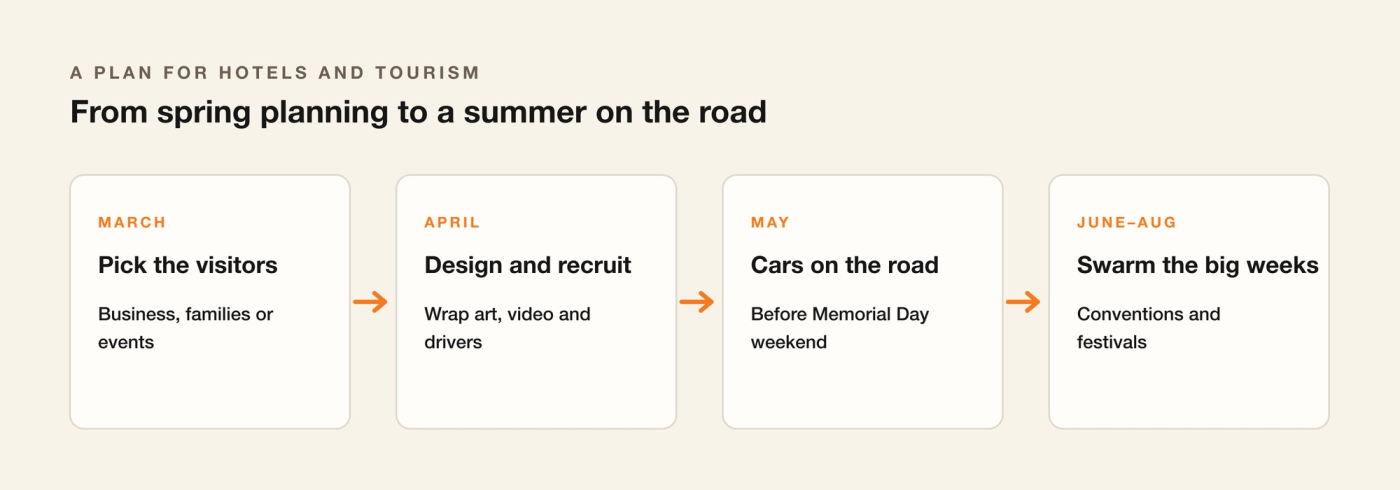
Wraps need time to recruit drivers, produce the wraps and install them before the start date, so a summer campaign starts in spring. Vugo confirms the lead time for your market. Before you call, settle five things:
- The visitors you want. Business travelers, families, couples, or the crowd for one event. Each wants a different ad.
- The area to focus on. The airport, a district, the whole metro, or the cities your guests drive in from.
- Your peak dates. The holiday weekends, conventions and events worth planning around.
- A booking page that works on a phone. Give the QR code its own page, so you can see the visits it brings in your own analytics.
- How you'll judge it. Scans, bookings and direct reservations, compared with the same weeks last year.
Visitors are going to be on your city's streets all summer. The question is whose name they see when they're deciding.
See how Vugo works for hotels and tourism, learn about vehicle wraps, in-vehicle screens and swarms, or talk to Vugo about your season.